Showing posts with label Plans. Show all posts

Sunday, November 1, 2020

Hal Wagstaffe's 1962 New Zealand Classic Moth Design

Moth Classique

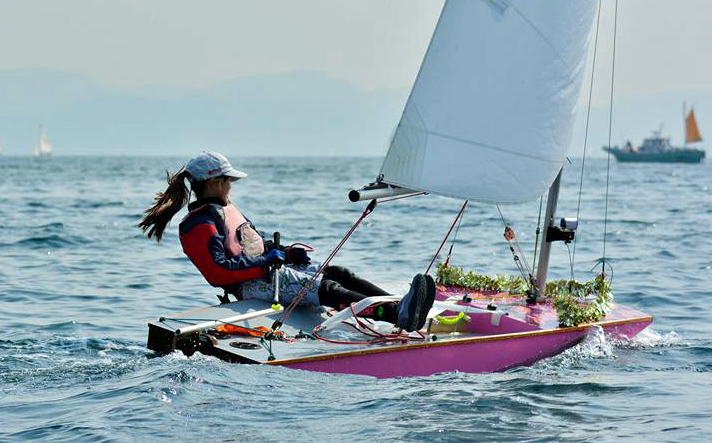
These Classic Moth lines plans popped up on FB. A multi-chine plywood, very much a middle of the road design, "Puriri" looks very worthy of someone building a reproduction. She would definitely fit in the Gen I division of the American Classic Mothboat rules. Puriri is an indigenous New Zealand tree.


More Classic New Zealand Moth designs can be found at this post (from Nedslocker). Includes Bruce Farr's first dinghy designs.

Monday, August 3, 2020

Australian Sailfish: Building Photo Documentation


Greg Barwick of the Australian Sailfish Association emailed me to point out they have now added a marvelous photo essay on building the Australian Sailfish to their website. (Look in the top Menu for "Building - a Visual Guide".) A must see for anyone interested in building plywood dinghies. Even experienced boatbuilders can pick up an idea or two in going through the photos. To make it easier I've listed the various chapters of "Building - A Visual Guide" with their links below.

To order plans for the Australian Sailfish.

Brian Carrol's photos of his build of an Australian Sailfish

Tuesday, November 26, 2019

Australian Sailfish: updated plans


News from Down Under. The Australian Sailfish class has updated their plans. From Greg Barwick:
"After many, many months of hard work, writing, editing; reviewing (repeat until you can’t sleep :-)), a new set of Building Instructions, complete with CAD drawn frame diagrams is now available. This has been an enormous task led by our own Chris Cleary, who built a boat as he went along just so he could adjust the Instructions and take photographs There was also a lot of input from Ian Urban (our CAD specialist), Ian Milton and others to get us to this point.

"When we kicked off the website and made the plans available three years ago, we had no idea how popular that would be, so plans have been sent out for the last three years without an allocated number. To mark this relaunch of the Plan Sets we are also starting numbering the plans once again.

"The highest number issued up to now was 3500, so we have decided that we will start the numbering of the new Plan Sets from 3501. I even have the original Plan Sales book to record it in!

"As well as a comprehensive set of Building Instructions, (76 pages) there are two A0 sheets of frame diagrams that will give full size Frame templates, one A0 Centreboard Plan & Section sheet and one A1 Rudder Sheet in each Plan Set.
We have also launched a new section on the website, 'Building . . . a Visual Guide', to be used in conjunction with the Building Instructions, so check that out as well.


Click here to order a set of Australian Sailfish plans.


Also a very earnest Earwigoagin TOH to the hard-working folks reviving this great little Australian dinghy.


Friday, July 5, 2019

Duster Plans

I've had a request for the Duster plans so here they are in PDF format. As always click on the arrow icon in the top right to open in another tab for printing or downloading.


Saturday, February 2, 2019

Brewsabee: Another Narrow Waterline Classic Moth Design


Brewsabee is my own design, done in 2005 as a follow on to my original Tweezer design. The design brief was to better compete with the Mistral in lighter air so the waterline beam and wetted surface was pared down compared with the original Tweezer. I never built Brewsabee because:
  • After Tweezer, I was getting at the age where I wasn't sure I wanted to continue to flop around in a narrow waterline Moth. Plus winning races now wasn't the end-all/be-all of my sailing existence.
  • Building would be more complicated. Brewsabee would be best done in foam/glass, something I wasn't too familiar with.
  • I wasn't sure, given the generally light conditions we sail in here in the Mid-Atlantic, that Brewsabee would offer any significant performance advantages over the Mistral.
So I decided to put together a Maser, a flatter Gen I design, which was an entirely enjoyable Mothboat sailing experience.

I don't consider Brewsabee to be an extreme V design, but she is a narrow waterline design.

The Brewsabee has forward flares at the gunwhale, legal in the American Classic Moth Rules since the 1 inch concavity rule doesn't kick in until after the daggerboard trunk. Sections below the waterline were a very hard U forward translating to flattened semicircular at the back.

Again, for printing or downloading, use the upper right icon to pop it into another browser tab.


Couldn't help myself - a video of Tweezer (no. 92) when she and the blogmeister were able to get to the weather mark first in light air in one race of the Nationals. But, dog-gurn-it, the Mistrals were still able to run us down over the course of the race.


Wednesday, January 30, 2019

A Brief History of the Extreme-V Classic Moth

Moth Classique

The Swiss-Dunand Moth represents a radical design jump in Moths. Not seen before in Moths were the very deep V sections of the Dunand, married to high rocker, resulting in a very narrow waterline. It was a design type that was to dominate the non-wing Moth era in the mid to late 1960's. From an historical viewpoint, it would be nice to credit a designer or group of Mothies for the development, but it appears this slice of European history hasn't yet made it completely out to the English speaking world. From what I have been able to determine:
  1. The Swiss Mothies were the first ones to develop this shape as a light-air lake flyer. It became an all-around design in the Dunand version and Swiss Jean-Pierre Roggo would win the Moth Worlds three years running, from 1964 to 1966. Besides Roggo, other Swiss Mothies sailing the Dunand were Claude Barth, Dennis Weber and Hogg
  2. In the winter of 1966, Benoit Duflos designed his very deep-V version Moth and the Duflos would dominate Europe through the rest of the 1960's. The Duflos was tortured into a shape beyond what you could bend a single sheet of plywood and was built using a horizontal slit about mid panel each side.
  3. In 1970, Brit Derek Chester would design the Mistral as a version of the Duflos that could be tortured up. Although in the 1970's, the Mistral design didn't find great success in Europe, the Mistral became the marquee racing design in the American Classic Moth Boat Association from 1999 onward.
The lines of the Duflos: (again use the pop-out icon to print or download).


1960's Duflos on trailer (with typical buff body of all Mothies of that age).


Some questions about the early history of the very deep-V?
  1. Who was Dunand?
  2. In the Swiss fleet, was there some precursor to the Dunand design that showed the way or does the Dunand design all alone represent a radical leap of faith? My assumption is the Swiss were initially working off the Fragniere design.
  3. There is mention that Jacques Fauroux had a deep-V design in the early 1960's. Where does this design fit into the chronology?


Mention must be also made of Chris Eyre's Lucky Sixpence design of 1966. This was another chined deep-V design, though Chris was working with wings in mind and his design had much straighter topsides.


Fellow Moth historian, good friend, George Albaugh,

who lives just down the road put these comments up, with the blogmeister adding my two-cents worth. Other fellow Moth historians, Doug Halsey and John Claridge, chime in as well on this discussion.

One. GA: Warren Bailey's "Mach One" design (World's winner in 1954) had so much rocker in the keel that the forward panels had to be pulled up "pram" style and then a false pointy glass nose was grafted onto the boat to give the hull a sharp stem look. "Mach One" had a deep vee that was similar to that of the Mistral/Duflos and may have been deeper than the Swiss design. The Cates-Florida design is a very watered down version of Mach One.
Tweezerman: You make a good point that Bailey's "Mach One" might be considered the original extreme-V. It was definitely considered more extreme than the Cates version that came after the original - but how extreme? Extreme enough to be lumped in with these later designs? I think not, but we only have photos of the "Mach One" to pore over and when I think tamatoo, you think tomato. We do know the Swiss Dunand's came over in 1965 and thumped the Cates. Would they have done the same to the Mach One? It would be correct to say the "Mach One", the "Cates", and the "Fragniere" were deep-V but I don't think the "Mach One" is extreme enough to achieve the reduction of wetted surface these designs achieved.
GA: As for whether or not Mach One was a deep-vee, narrow water line boat compared to the Mistral, we'd need access to Warren's half model which his son George has, rather than my memory. I think the most dated aspect of the Bailey design would be the small, pinched transom--a feature replicated on the Cates-Florida design. The Mistral would plane sooner.

Two. GA: Duflos' boat was designed in '62 rather than '66. He tweaked the design in '72 to accommodate the the then newly adopted Aussie tall rig.
Tweezerman: This is where the history is somewhat muddied. I do have a design list in my archives, listing the Duflos as a 1962 design. I also have in my archives a history that lists the Duflos as a design done in the fall of 1966 and introduced at the Cannes Ski-Sail Regatta, April 1967. I'm going with 1966 for two reasons. If the Duflos was introduced in 1962 it should have been competing with the Swiss Moth and most likely winning. There is no record of that occurring. Also, Chris Eyre wrote a report of the 1967 Europeans where he mentioned the Duflos as a new design, at least new to the English. If the Duflos design had been out for four years by 1967, I don't think anyone would have considered it a new design.
GA: I have plans from Benoit Duflos dated 1962.
John Claridge:The first [Duflos] I saw in the UK was built for Bridget Quick, again by Bill McCutcheon, in I think 1966.
Doug Halsey: I also have plans from Benoit Duflos dated 1962, and a 1966 newspaper article (in French) referring to the 1962 date. Marie-Claude Fauroux sailed the Duflos at the 1966 Worlds in Lausanne and was extremely fast, but inconsistent. She won 3 of the 6 races, but was out of the top 10 in the other 3 and finished 4th in the final standings. (Lots of us, other than Roggo and Ganter, were very inconsistent.) Benoit Duflos and Jacques Fauroux were also there, but were not in the top 10 overall. (I'm not sure if Jacques was sailing a Duflos, or if he was there for every race though). I have newspaper articles with results of individual races, photos, and longer discussions (in French), and some shorter clips from the London Times, which I will scan and probably post somewhere when I get a chance.

Three. GA: The designer of the Mistral--a clever attempt to capture Duflos' elegant but difficult to build shape, using flat ply panels, was Derek Chester, NOT Merv Cook! The Mistral design went through two versions (we use the Mk II version here) and was followed by the Mirage which while mimicking the Mistral shape was much narrower. The Mirage required wings and even so was difficult to sail in a breeze. Few were built as faster narrow winged Moths like the Stockholm Sprite hit the race course at about the same time. The main appeal of the Mirage was that it was so narrow, one could get both hull panels from a single 4 x 12 sheet of ply.
Tweezerman: Busted on that one! I got to the end of writing the post and went with my faulty memory instead of fact checking. I've done the correction in the main post. I've tried to remain with designs that were done in the non-wing era. Below is the lines of a modified Mistral - the Y2KBug. The transom has been flattened on this mod


4. Four. GA:  I have never seen any of Jacques Fauroux's boats from the early '60s but several French designers beyond Fauroux and Duflos were building their own boats then. One of the unifying aspects of French and Swiss Moths of this era was the love of the free-standing or "Finn rig" mast. Later on, towards the end of the low aspect era, both Jacques and his sister Marie-Claude were racing Duflos Moths. Marie-Claude is one of two women to win the World's out right.


1971 Fauroux: Neil Kennedy, digging through his extensive yachting library of Nedslocker, sends along this design sketch of the 1971 World Champion Jacques Fauroux extreme-V Moth. For the 1971 Worlds Jacques had done a modified Duflos, with even more rocker than the Duflos and a more circular midsection. He had built her out of 2mm. ply at a hull weight of 22 kg. Width was 5 feet (1.52 meters) with 4 inch (.1 meter) gunwhales.

Seacraft Magazine, March 1972

Sunday, January 27, 2019

The Swiss Dunand Classic Moth

Moth Classique, 2018 Classic Moth Nationals

At the 2018 Classic Moth Nationals, for the first time in about twenty years, a hull design other than the Mistral won the Gen II class (faster designs). Joe Bousquet took a dilapidated Swiss Dunand Moth, (a fiberglass Swiss hull built by Fletcher Marine), rehabbed it with his signature tub cockpit, and proceeded to win easily in very light airs.

This is Blair Fletcher in the original plywood Swiss Dunand Moth he purchased from the Swiss after they won the World Championship in 1965 at Cape May, New Jersey.


As seen below on Joe's double-deck trailer, the Swiss Dunand (top) and the Mistral (bottom) share very much the same rocker line and the midship V-shape is also very similar. The differences are the Swiss Moth has much fuller bow sections, there is a topside chine on the Swiss Moth, and the stern is V-shaped vs. the semi-circular transom on the Mistral. The Swiss Moth also has more freeboard.
 

Joe pioneered the swoopy tub cockpit on the his first Mistral, Try-Umph, back in the late 1990's and put the same cockpit on the Swiss Moth. (Almost all the Mistral's built since have the same cockpit.)


Joe going upwind in as much breeze as showed up at the 2018 E-City Nationals. Joe had to sit much further forward on the Swiss Moth to keep the full bows in the water.


Another view of the full bow of the Swiss Moth.


Joe in Swiss Miss (2379), to the right of the Mistrals of  Mike Parsons (70) and John Zseleczky (111).


The lines for the Swiss Dunand Moth showed up on Louis Pillon's Moth website and are reproduced below. It appears that some anonymous Moth nerd has fed the Swiss Moth lines through some hull fairing program. If you want to print, use the top right arrows pop-out icon to put this into another tab on your browser.


See this post for Bertrand Warion's fiberglass Dunand variant.


2018 Classic Moth Nationals

George A. over at the Mid-Atlantic Musings blog did a three part series on the 2018 Classic Moth Nationals with plenty of photos. Click on the links below to read through his reports.


Monday, February 19, 2018

Northbridge Junior; A Japanese Build

I wrote about Frank Bethwaite's plywood junior scow, the Northbridge Junior, as part of a post on the sit-on-top dinghies. Last fall I came across some photos on the Web of a new Northbridge Junior built for a Japanese junior. The blogmeister, being one that feels we should encourage junior sailors in home-built dinghies, offers up the photos of the first day launching:


Two sheets of Northbridge Junior plans:

Sheet 1:


Sheet 2:


Gwen 12 - 1971 Plans

Back in October, 1971, I wrote about the plywood, 12' two man Australian speedster, the Gwen 12, I mentioned I had in my possession a set of double bottom plans from the 1970's, courtesy of Aussie Andrew Chapman. I present them below. As always it is best to view this PDF file in another tab; click the arrow icon on the top right of the view box.


I think if I was to build a Gwen 12 in the U.S.A. I would glom a 420 rig onto the hull, particularly the non-class legal fat-head main that the collegiate programs seem to be now favoring.

TOH to Andrew Chapman for sending these along.

Wednesday, October 25, 2017

Ian Oughtred on Building a Gwen 12

Famous classic boat designer, Ian Oughtred, got his start in the sporty Australian Gwen 12, a single trapeze, DIY plywood, double hander. He was class champion sometime in the 1960's. Andrew Chapman has been feeding me some Gwen 12 material including this article by Ian Oughtred on building the Gwen 12. This looks to be from Seacraft issue of boat plans.

The Gwen 12 was designed by Australian Charlie Cunningham in 1948 as one of the first stressed ply dinghies. Like most Australian designed plywood dinghies, the Gwen 12 was extremely popular in the 1950's, 60's,  and 70's but died out in the 1980's. Below is the cover of the May 1958 Seacraft issue with what almost looks like a colored post card of the Gwen 12.


Here is the article by Ian in PDF format. Click here for 1971 plans for a double-bottom version of the Gwen 12.


Two restored Gwen 12's showed up at the South Gippsland Y.C. Australian Classic Wooden Dinghy Regatta in 2017.

Monday, August 28, 2017

Geezer International Canoe Design Redux - IC Fatso

If you dig far enough back in Earwigoagin, you'll suss out the blogmeister's history as an International Canoe sailor. (Though, truth be told, I had more-or-less completely stepped out of the class a long time ago, seventeen years ago, way back in 2000, long before this blog.) The International Canoe's are really great performance single-handed dinghies, and they are proving to be a good fit for top-notch (and I mean top-notch) oldster dinghy-ites who have kept up their fitness and boat building skills (ref. Chris Maas, Robin Wood, Steve Clark, Alistair Warren, Colin Brown and others (many of these skippers I competed against in the 1980's) - though you do need a bit of extra dosh to play at the top level; carbon this, carbon that, jibing daggerboard, T-foil rudder, mylar this, super control that... it all adds up).

What prompted this post was this recent comment by Steve Clark (ruminating after the recent International Canoe Worlds in Pwhelli Wales, UK) over at the Sailing Anarchy forums.:
"The elders are thinking nice thoughts about a little more stability. Remember that the old development rule allowed boats as skinny as the new rules (750mm) and the boat that emerged as "best compromise" was 1014 mm wide. So I had been meditating about what I can do in a beamier hull form. It will probably give something away upwind and in a short chop, but there isn't much slower than a capsized IC. I have an idea, based on Lou Whitman's Phoenix that was probably faster than the Nethercot in 1970, but never got much of a chance after the ICF made the Nethercot the only approved shape."
Being humble as I am (Oh, what the heck, push your brilliance out there) -- I was echoing Steve's most recent thoughts for a oldster International Canoe over ten years ago!

When Steve Clark proposed his new rule back in 2005, which favored very narrow IC's, I, being the maverick, thought - why not have an IC that was 18.5 feet long and beamy -- should end up about the same speed and easier to sail. So I drew this one up based largely on the Whitman Phoenix design. Predictably, there was not a lot of support from the class to add 1.5 feet (457 mm) in length to the IC rule and this design became an interesting but ultimately a dead-end footnote in International Canoe history. (Note this design was done in 2005 - 12 years ago.) (ed. note: The Phoenix International Canoe, drawn up in the 1960's, was a very fine-lined, shallow-V, beamy International Canoe design by American International Canoe designer wunderkind of post-WWII - Lou Whitman.)


Two years later, 2007, I pulled in my elongated, mod-Phoenix design IC into the normal International Canoe length - 17' (5.182 meters) and did a new design, the IC-Fatso.

The sections (I kept a tall bow to hopefully keep green water from sluicing over the foredeck.):


The topview of IC-Fatso:


Maybe if you wait long enough, you find yourself sitting on the right part of the circle as it comes around again ... and then maybe not. Dinghy designs are always food for thought and more often than not, there is nothing new under the sun.

The IC-Fatso remains a design exercise. I've never checked to see if the IC-Fatso would fit the current IC rule (it would be an OK design to the older one). The IC-Fatso would, under most conditions, be slower than the current narrow IC's and the IC-Fatso wouldn't qualify as a Classic (the Nethercott, Slurp are the two designs in that fleet). It would be a safe design that would get you around mid-fleet with less trauma than the current designs and possibly faster than the Classics but it seems to fit in a tweener world - which makes it a difficult proposition to build for the class.


The blogmeister sailing his Nethercott "No Eyes" at the International Canoe Nationals at Lewes, Delaware in the early 1980's. We made it a family vacation that year and, in 2017, some 30 odd years later, returned a second time for a family beach week (no sailing).


Tuesday, August 22, 2017

Australian Sailfish - New Build Completed

Brian Carroll, son of Jack Carroll, designer of the Australian Sailfish, has finished up building an Australian Sailfish over the Australian winter. Greg Barwick sends along this photographic documentation of the Brian's boat build. Greg reckons this is the first new build in thirty years. There seems to be a great uptick in interest as the class website has recorded forty downloads of the Sailfish plans over the last nine months.

To put the document into another tab (for viewing or printing), click the pop-out icon in the top right hand corner.


More Australian Sailfish posts from the Earwigoagin archive - including some of the American Sailfish as well.

Sunday, May 21, 2017

Rainbow Scow Plans

The Australian Rainbow scow was a simple flat-bottomed, main and jib scow most popular around the Melbourne area; a DIY plywood design, typical of post WWII classes. These plans popped up on the Internet so I'll share them on this blog.

As always, use the pop-out icon on the top right to open this in another tab in your browser


Other Earwigoagin posts on the Rainbow Scow.

Tuesday, March 14, 2017

Peter Cole Mouldie Scow - DXF format


The Peter Cole cold-molded scow design was the top dog in the Australian Moth class in the 1960's (before wings). It was superseded by the double-chine, plywood Imperium design. Here is a dxf file of the Cole Super Moth (he pushed the centerline hollow very hard on this Super Moth). This design would make a good wood strip project for someone who wants a round-bilge scow Moth. Dimensions in the dxf file are in meters.

Station spacing is:
  • Station 1 - 76 mm.
  • Station 2 - 304 mm.
  • Station 3 - 608 mm.
  • Station 4 - 912 mm.
  • Station 5 - 1216 mm.
  • Station 6 - 1520 mm.
  • Station 7 - 1824 mm.
  • Station 8 - 2128 mm.
  • Station 9 - 2432 mm.
  • Station 10 - 2736 mm.
  • Station 11 - 3040 mm.
  • Station 12 - 3333 mm.

To print or download, use the "open in a new tab" button (the one with the arrow) in the top-right corner of window below.


Two photos of the Cole Mouldie scow taken in Jim French's boat shop. The hulls were painstakingly molded out of 1/32" veneer and thousands of staples.


A vintage photo of two red Mouldies at play.


Wednesday, March 1, 2017

Bilbon Classic Moth Offsets

Plans de voiliers classiques Moth, Plans de dériveur classique Moth.
Concours de Plans pour Moth Classique lancé par "Le Chasse Marée"

Every winter I try to put together offsets of another Classic Moth. This is Bilbon, a design by Christophe Couton, which was the best of the new designs in the 2001 design competition sponsored by the magazine Le Chasse Marée. This Classic Moth design sports a pram bow and looks to be a stable design with it's wide beam. I've modified the design slightly to put a small curve in the bottom panels. The offsets are at the end of this post in a PDF file.

A very simple hull shape should make for a straightforward build.

Marc Morell
Bilbon sailing bow-on to the camera with the pram bow featuring prominently. Chrisophe modeled this design on the Herbulot Caravelle design which also features a pram bow, but is a larger, main and jib dinghy which is popular in France. I like Bilbon's purple paint scheme. Moth no. 111 is the all aluminum Gouget design.

Marc Morell
Looks like Christophe used simple pine frames sistered together on the centerline. A center traveller controls the mainsail and the mast is stepped on the keel.

Marc Morell
Another view of the interior.

Marc Morell

Use the arrow icon on the top right to put this PDF of the offsets into another tab for printing.


Friday, January 20, 2017

Header Photo: William F. Crosby "Pup" Dinghy


The previous header photo was the side view of Crosby's Pup dinghy, a V-chine design published in the August 1938 issue of Rudder magazine. What is interesting about this design is Pup is one of the first dinghies designed to be built in plywood. Even more surprising is Crosby specified 1/8 inch (3 mm.) plywood for the hull and decks. Crosby seemed to have no fear, this early on, in pushing the structural limits by using very thin plywood. (Designers post WWII such as Phil Rhodes with his Penguin dinghy would revert back to the sturdier 1/4 inch (6 mm.) plywood for the hull.)  To account for the flexibility of the plywood, Crosby added one fore and aft stringer and two smaller, intermediate frames between the major plywood frames.

The Pup dinghy may be one of those "missing links" I am so fond of speculating about in sailing history. I have always wondered what spurred the Australians into wholesale acceptance of thin, lightweight plywood for their dinghies designed after WWII. (The Aussies would even convert their pre-WWII plank on frame designs before WWII over to light ply, their existing VJ class and 12 meter Olympic Sharpie.) I received an email from a South Australian dinghy sailor two years ago and he mentioned that he owned an Aussie Pup built by a local builder in the early 2000's. He also mentioned there was a sizable fleet of Pups in the Melbourne area in the 1940's but they had died out.

Could it be that some Melbourne sailors, in building the 1/8 inch ply Pup before World War II, would become the impetus of the Australian revolution in lightweight dinghies? Certainly South Australian Len Morris with his scow Moth would have taken notice as he would produce his superbly engineered, light plywood Mk II in the late 1940's. It would be an interesting slice of dinghy memorabilia if someone could dig up some photos of the Melbourne Pup fleet in the 1940's.


For those that want more information, Steve Clark pointed out, in the comments section, the current builder of the Australian Pup has a Facebook page.


A JPEG file of the Pup plans as they appeared in Rudder magazine, 1938.


Wednesday, January 11, 2017

RazMoth II Drawing: Classic Moth News - Winter 2017

Plans de dériveur Classique Moth


Bertrand Warion sent along his working drawing of the RazMoth II. Lesser mortals would want more detailed plans, with scantlings and dimensions written on every piece of wood, but, for an experienced Moth boat builder, this is all you need to produce a working Mothboat. These drawings show the strong Fireball influence in this design. We also have in the Earwigoagin archives, the Mothball, a Moth dreamed up by Floridian Patrick Burger, who chopped off the back five feet from a Fireball to make a Moth. There is some similarity between the two.

The section spacings are hard to read on the drawing but should be:
  • Curve of nose piece - 3.7 cm 
  • Station 1 - 85 cm.
  • Station 2 - 137 cm.
  • Station 3 - 190 cm.
  • Station 4 - 261 cm.
  • Transom - 331 cm.

Another photo of the RazMoth II under sail with a storm brewing on the horizon.


Construction of RazMoth MkII


Saturday, October 15, 2016

505 Classic Moth


Continuing with the 505 theme, the image above is one that ever-vigilant Neil Kennedy plucked from the Web. It is buried deep within a very interesting article on 505 designer John Westell, written by British historian David Henshall, found on the Yachts and Yachting website. The image is the lines drawing, the waterlines and buttocks of a Classic Moth that John Westell designed on his 505 theme. (No date is given for the design but it would be safe to assume sometime in the 1960's.)

I initially thought this design would not have met the 1 inch (25mm) hollow rule the class had in the 1960's (and a rule that our modern Classic Moth class still retains) but on second look it seems that John Westell did meet the rule (the rule applies aft of the daggerboard trunk and John did reduce the gunwhale flare to what looks to be legal limits in the back of this Moth).

Speed-wise this design does not offer any advantages to our current Gen 1 race-horses (the Shelley, the Europe, the Cates) but for someone who wanted to build a lovely mini-505 and race Classic Moths, this would be a very interesting and welcome addition to our polyglot group.


Monday, September 26, 2016

Benoit Duflos - Moth-Pop - Computer Massage - Part 3

Plans de dériveur classique Moth

I've run Benoit Duflos Moth-Pop design thru my hull software. The result is close but not exactly to Duflos' original plans. I've changed the original stations somewhat. Stations 1a, b, c, d, and 8e from Duflos' plans remain mostly the same but I've put other stations in new positions.

Frames are placed at (dim in mm from bow):

30(1a), 375, 750(b), 1250, 1750(c), 2300, 2850(d), 3335

You could use all these frames in a build if you wanted a stiffer but heavier hull.

For reference, in the section drawing below, waterlines are spaced at 60 mm (except for the first one above baseline, which is 30mm), and the buttocks are spaced at 150 mm.
Below is the .DXF file. Use the pop-out icon to open the file in another browser tab to download for use in a CAD program. Dimensions in the .DXF file are in meters.


Here are the offsets in mm. In the Moth-Pop Duflos designed a positive curve in the topside panel to improve stiffness. I've designated that point as the Top Side Bump-Out. There are also some points in the aft stations to mark out the bottom panel curvature.


Sunday, September 11, 2016

Benoit Duflos' Moth-Pop, Construction Plans, Part 2

Plans de dériveur classique Moth


Here is a short PDF showing the construction details of building the Moth-Pop upside down over the flat deck. Use the pop-out icon on the top-right corner to put the PDF file into another tab on your browser. From there you can print or download.